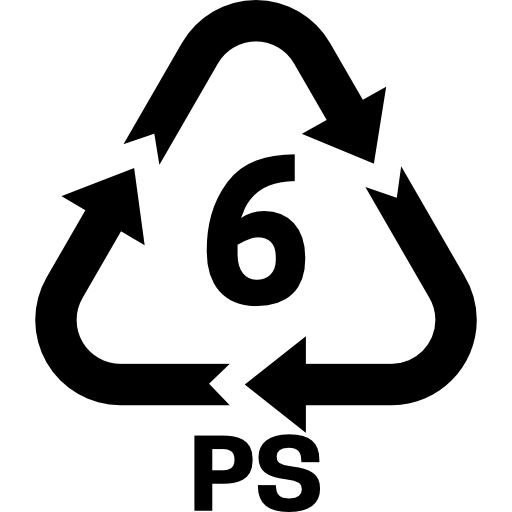
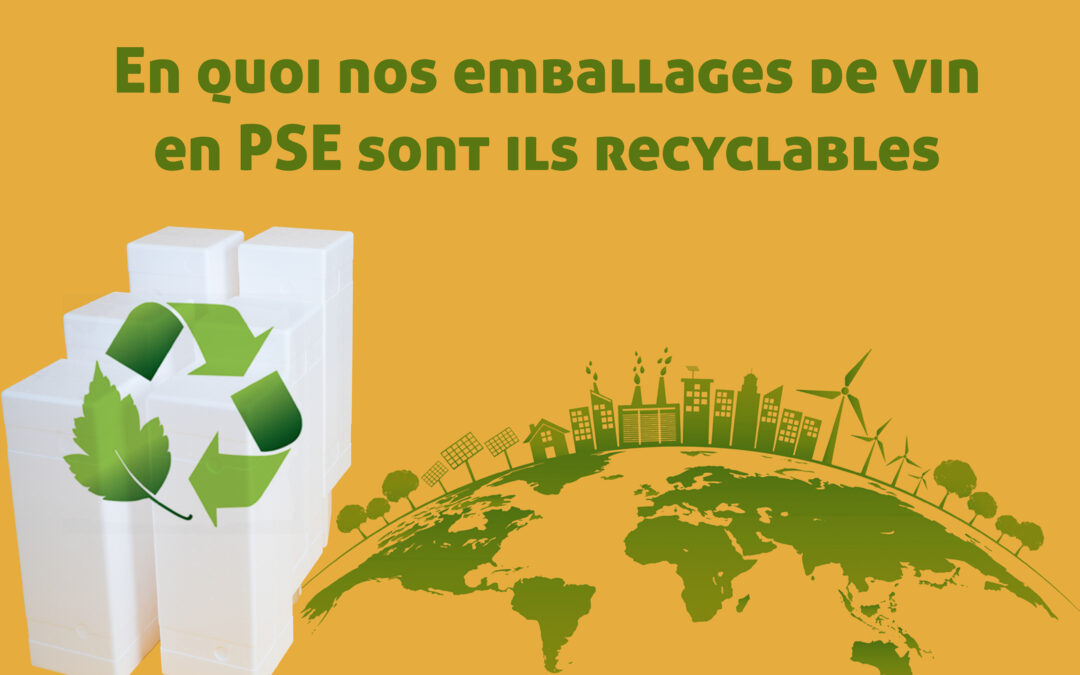
All our packaging is made of Expanded Polystyrene, an eco-responsible material, and thanks to this article you'll know why! Expanded polystyrene is a plastic material. It is easily identified by its whiteness and lightness. On some packaging, it is marked with the number 6 and the abbreviation PSE. Often referred to simply as polystyrene, expanded polystyrene is an everyday material. It is used, for example, for : It can also be found : It is also used : Astonishing as it may seem, we have to go back to Egypt 3000 years BC. Embalmers used a resin extracted from an oriental tree: Liquidambar. Then, 4000 years later, in 1786, an English scientist came up with the idea of distilling Liquidambar resin and extracting an oil called Styrax. It was then used as a respiratory stimulant. In the 19th century, French chemists succeeded in isolating styrene molecules from Styrax and synthesizing them in the laboratory. Finally, in 1925, a German chemist succeeded in assembling several styrene molecules and named them Polystyrene. It was finally in 1951 that the first expansion of polystyrene was carried out by the German doctor STASNY, who went on to patent EPS. EPS has a number of special properties that have enabled us to make our Europackwine packaging fundamental: Expanded polystyrene is a 100% recyclable material: In 3 minutes, EPS is reduced by 20 times its original volume. It can then be reused after distillation for manufacturing. Click here for more information on the process. If expanded polystyrene is mixed with other waste, or if it's too dirty to be recycled, it's very easy to burn in an incinerator. It will even help other waste to burn faster. As it burns, it produces a great deal of energy, which is recovered and transformed into electricity, hot water or steam to heat buildings or industrial areas. This saves energy. Thanks to its 98% of air, EPS requires very little expandable polystyrene in its various applications. Just 8 grams to pack 2 minced steaks weighing 115 grams each! As it is manufactured on a steam basis, it consumes very little water. What's more, it's reused in the manufacturing cycle. The steam expansion process limits atmospheric emissions. EPS contains and uses no ozone-depleting gases, and releases no toxic gases when incinerated. Expandable polystyrene granules are obtained by polymerizing styrene. They are impregnated with a gas, pentane, which is then used for expansion. Expandable polystyrene granules are obtained by polymerizing styrene. They are impregnated with a gas, pentane, which is then used for expansion (up to 30 times their initial volume). Once pre-expanded, the beads rest in silos for several hours to allow them to dry. The pre-expanded beads are introduced into a hermetically sealed mold, and subjected to a further injection of steam. They expand, occupying the entire mold space, and weld together to form the packaging. And that's it! Our Europackwine packaging is now finished and ready for dispatch to our warehouses and distribution centers!Expanded polystyrene
What is expanded polystyrene?
Where can I find the PSE?

How was polystyrene discovered?

What are the properties of expanded polystyrene?
Expanded polystyrene: an eco-responsible material?

For the environment?
EPS uses few raw materials
Expanded polystyrene uses little water
PES has little impact on the atmosphere
How is polystyrene made?

Step 1: Expandable polystyrene
Stage 2: Pre-expansion
Stage 3: Maturation of pre-expanded beads
Stage 4: Moulding and packaging
Find out more about our Europackwine products
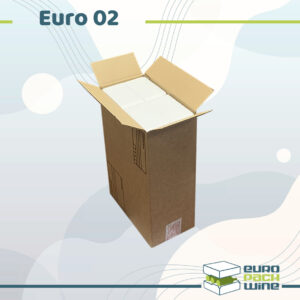
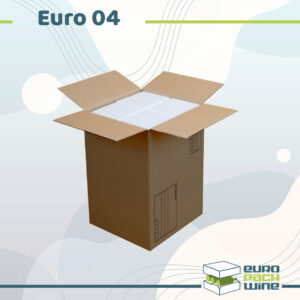
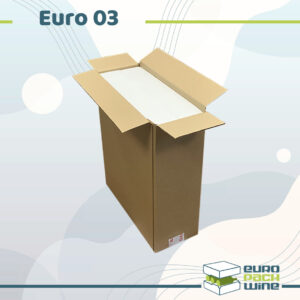
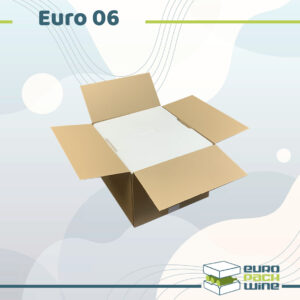
Our wine packaging in EPS
 English
  Français
  Español
  Italiano
  Deutsch